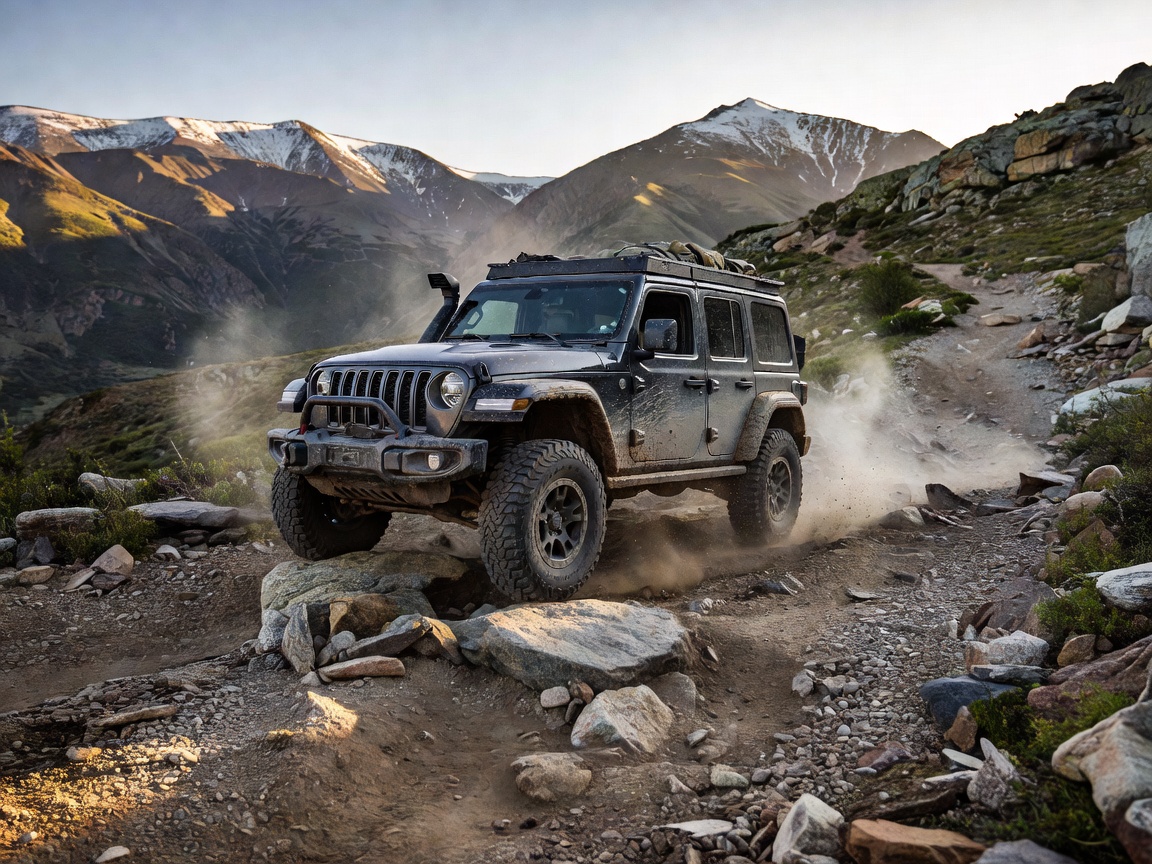
01 / START WITH THE JOB
What does the vehicle need to do?
Start with an honest trip profile. A vehicle that handles forest roads and weekend camps has different demands from one carrying several people, weeks of supplies, and equipment into remote country. Write down the passengers, realistic cargo, road surfaces, trip duration, and likely maintenance access. That list is more useful than a build photograph with every accessory in the catalogue.
Then consider how much of the vehicle’s life will be ordinary driving. A daily-use SUV may be the best choice when it needs to commute, fit a parking space, carry family, and occasionally travel rough gravel. A dedicated off-road vehicle can make sense when difficult terrain is a frequent priority and you can accept greater noise, ride compromises, or specialist maintenance. A long-distance expedition build is a system: vehicle, load, fuel and water plans, repair access, and the people who will use it.
Construction and driveline: useful distinctions
Many traditional off-road vehicles use body-on-frame construction, where the body and chassis are separate major structures. That arrangement is common in vehicles intended for demanding loads and varied use, though the label alone does not promise capability. Unibody construction integrates body and structure. It is common in modern SUVs and can support comfortable, efficient everyday use while still being suitable for many gravel roads and moderate routes. Design, tyres, geometry, systems, and intended limits matter more than a simple construction-type contest.
All-wheel drive and four-wheel drive are not interchangeable marketing shorthand. Systems vary widely: some distribute drive automatically, some offer selectable modes, and some vehicles provide low-range gearing. Low range can provide a slower, more controlled gearing choice where the vehicle has it; it does not replace sensible line choice, training, or knowledge of the system. Read the owner’s manual and understand the controls before a challenging route.
Geometry, clearance, and turning space
Ground clearance describes space beneath relevant vehicle components, but measurements and reference points differ. Approach angle concerns the front end’s ability to meet an incline without contact; departure angle is the equivalent at the rear. Breakover angle relates to the underside passing over a crest. Bumpers, steps, tyres, suspension compression, and loaded weight can alter the practical picture. Wheelbase is another trade-off: a longer vehicle can be composed on open roads and offer useful interior room, while a shorter one can be easier to place in tight turns. Neither is universally superior.
Before buying, consider actual access and maintenance. Can the vehicle be serviced in the places you expect to travel? Are parts and knowledgeable repairers available on your likely route? What is the manufacturer’s guidance for water crossings, towing, roof loads, and permitted modifications? Those details deserve more attention than a badge or an optimistic sales description.
Payload is the quiet build constraint
Payload is the allowance for people, luggage, accessories, and other carried load, as defined for the particular vehicle. It is not a suggestion to be spent twice. Bull bars, winches, racks, drawers, tents, passengers, water, and food all add weight. Towing also affects the vehicle’s permitted loading picture. Check the exact vehicle documentation and local requirements; do not estimate by comparing it with another model or trim.
Expedition layouts should keep frequently used equipment accessible and distribute mass sensibly. Fuel range depends on the vehicle, load, driving, terrain, weather, and available refuelling. Plan conservatively and check reliable current sources for fuel availability. Water planning should account for people, conditions, duration, and backup options rather than assuming one container size suits every trip.
Three common starting points
| Approach | Strengths | Trade-offs | Best fit |
|---|---|---|---|
| Daily-use SUV | Comfort, everyday versatility, broad use | Limited payload or clearance may constrain a loaded trip | Mixed commuting and occasional travel |
| Dedicated off-road vehicle | Purposeful setup and familiar controls | Ride, running costs, and daily practicality can be less convenient | Frequent trail use with realistic ownership expectations |
| Expedition build | Integrated storage and trip-specific equipment | Added mass, complexity, cost, and reduced flexibility | Longer journeys where the whole system is planned |
Buying mistakes worth avoiding
Common missteps include buying on appearance, fitting parts before defining the trip, overlooking payload, assuming a roof rack’s advertised figure covers every configuration, and confusing a modification with extra capacity. Another trap is building for a hypothetical remote journey while ignoring the routes you actually drive. Keep modifications proportionate, preserve a useful spare, and learn the vehicle’s operating limits.
Good for: anyone comparing an everyday SUV, a dedicated trail vehicle, or an expedition-oriented configuration. What to know: vehicle specifications, legal requirements, and modification implications vary by exact model, market, and year. Confirm details with the manufacturer and appropriate local authorities before purchase or travel.
A practical selection checklist
- List passengers, cargo, and likely trip duration.
- Match terrain and geometry to documented vehicle limits.
- Check payload, towing, roof-load, and tyre guidance.
- Think about maintenance access and parts availability.
- Compare daily comfort with the capability you genuinely need.
- Leave room in the plan for weather and route changes.
Remote travel in Iceland, the Scottish Highlands, or the Alps can involve very different road types and access rules. Public roads, designated gravel routes, permitted trails, private land, protected areas, and seasonal routes are not interchangeable. Check official local road and land-management sources before setting out; do not assume an attractive track is open or legal.