02 / MATCH THE SURFACE
No tyre is brilliant at everything.
Tyres are often the first modification people consider, and for good reason: they influence grip, ride, noise, steering, braking, and the vehicle’s relationship with loose surfaces. But there is no universal “best off-road tyre.” The right choice depends on the proportion of paved roads, gravel, sand, mud, and rock; the vehicle’s load; climate; and the manufacturer’s approved sizes and ratings.
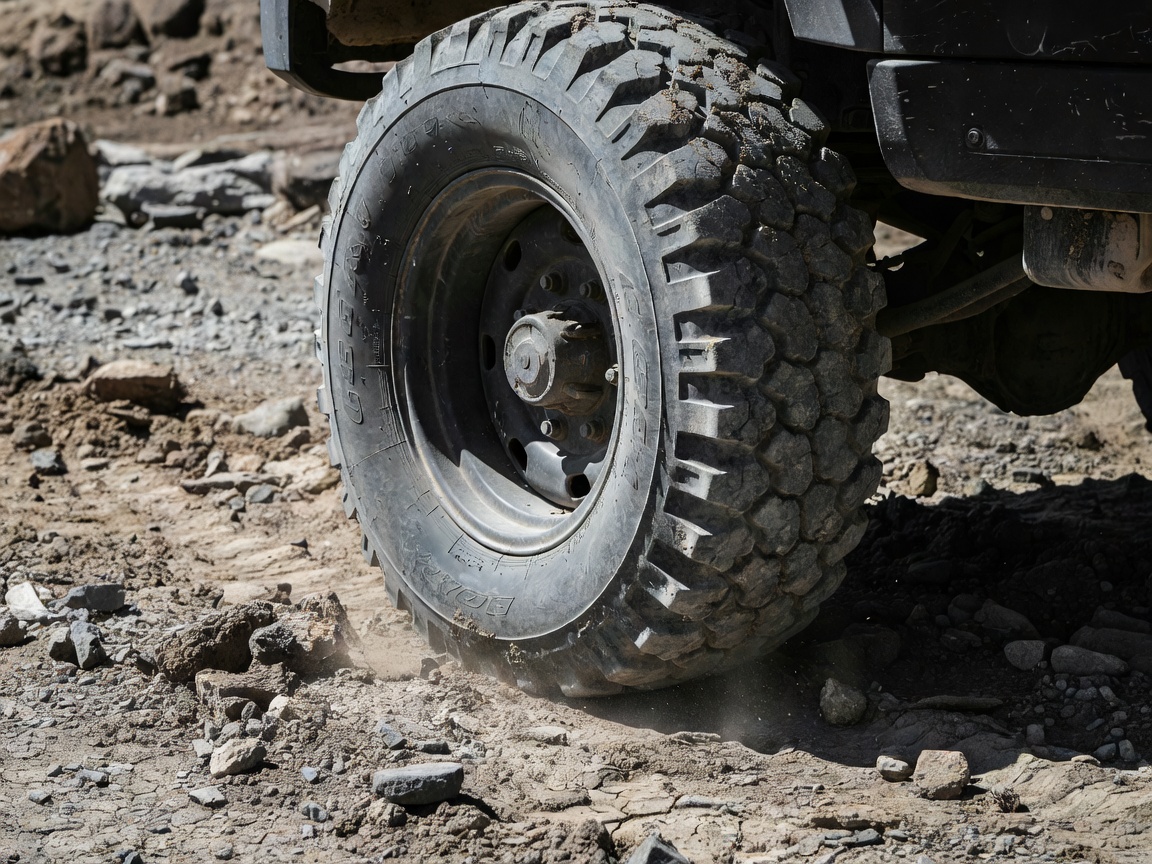
Road-oriented all-season tyres generally prioritize predictable paved-road manners and everyday use. All-terrain tyres usually aim for a broader balance, with tread designs intended to handle a mix of road and unsealed surfaces. Mud-terrain patterns commonly use more open tread voids and prominent blocks to work in soft, muddy conditions. That same pattern can bring more road noise, a different wet-road feel, and other compromises. Individual models vary, so category names are only a starting point.
Construction, tread, and load
Tread pattern affects how a tyre engages different surfaces and clears loose material. A more open pattern may be useful in some soft terrain but can feel less settled on smooth roads. Sidewall design matters on rough ground, yet the existence of reinforced construction does not make a tyre immune to damage. Tyre construction, sizing, load index, speed rating, and pressure must suit the vehicle and intended use. Follow the exact vehicle and tyre manufacturer guidance, including any applicable local requirements.
Load ratings deserve particular care on touring vehicles. Passengers, equipment, towing, and altered vehicle mass can change what is appropriate. Do not assume a tyre is suitable because it fits the wheel or because its tread looks rugged. Confirm compatibility with a qualified tyre professional and the vehicle documentation. Keep a correctly specified spare and make sure the tools and access needed to use it are understood.
Pressure is a context, not a magic number
Pressure affects the tyre’s shape and behaviour, but a safe adjustment depends on the vehicle, tyre, terrain, load, speed, temperature, and manufacturer instructions. There is no single pressure that can be responsibly recommended for every vehicle or surface. If considering an adjustment for off-pavement travel, use guidance from the vehicle and tyre makers, assess the actual load and conditions, and understand the limits for speed and distance. Restore the appropriate road setting before returning to normal road speeds, as directed by the relevant guidance.
A portable compressor and a reliable pressure gauge can support careful preparation. Their presence is not permission to improvise beyond approved limits. Inspect tyres after rough sections and before a long paved leg. Look for cuts, bulges, embedded debris, unusual wear, and damage to the wheel. If you are unsure about a tyre’s condition, seek professional advice rather than asking it to finish the trip on optimism.
Suspension: more than ride height
Springs support the vehicle and its load; dampers control movement. Suspension travel describes the wheel’s ability to move relative to the body, but useful articulation is only one factor in a complete setup. Ground clearance can be affected by tyres, vehicle load, suspension design, and the position of vulnerable components. A lift may alter geometry, alignment, driveline angles, handling, and component wear. Results depend on the specific vehicle and parts, so generic claims about a particular amount of lift are not a substitute for engineered, model-specific advice.
Added weight matters. A vehicle carrying racks, drawers, water, and passengers can behave differently from the empty vehicle used in a promotional image. Springs and dampers must be selected for the actual use and load range. Stiff is not automatically capable, and a tall stance does not make a vehicle immune to obstacles. On paved roads, modifications can affect ride comfort, braking response, steering, and stability. Have work assessed by qualified professionals and keep alignment and maintenance on schedule.
Terrain trade-offs at a glance
| Use | Consider | Trade-off to weigh |
|---|---|---|
| Highway and daily use | Road manners, wet grip, noise, load rating | A more aggressive tread can increase noise or compromise road feel |
| Gravel roads | Durability, suitable load rating, regular inspection | Rough surfaces still demand careful speed and tyre checks |
| Sand | Vehicle guidance, load, pressure management, recovery plan | Soft surfaces can build heat and trap a heavily loaded vehicle |
| Mud | Tread clearance and conditions | Deep mud may conceal hazards and create recovery risks |
| Rocky trails | Sidewall condition, clearance, line choice | Sharp edges can damage tyres and underbody components |
| Mixed expedition travel | Balanced tread, spare planning, maintenance access | A compromise setup will not excel everywhere |
Care and common mistakes
Check pressures when tyres are cool where practicable and follow the manufacturer’s checking procedure. Monitor wear patterns, rotate only as specified for the vehicle and tyre, and have alignment investigated when steering or wear suggests a problem. Keep track of the spare’s age and condition; a spare that has sat untouched for years is not automatically ready for a remote route. Avoid mixing incompatible tyres or sizes and never overload a tyre beyond its documented rating.
Frequent mistakes include choosing tread by appearance, lifting a vehicle before checking its loaded weight, overlooking alignment after suspension work, and applying one person’s pressure advice to a different vehicle. A qualified technician can assess compatibility, installation, and legal implications. This guide is general education, not instructions for lifting a vehicle or modifying suspension.
Good for: drivers comparing mixed-use and terrain-specific setups. What to know: approved specifications and pressure instructions vary; consult the exact vehicle and tyre documentation before making changes.